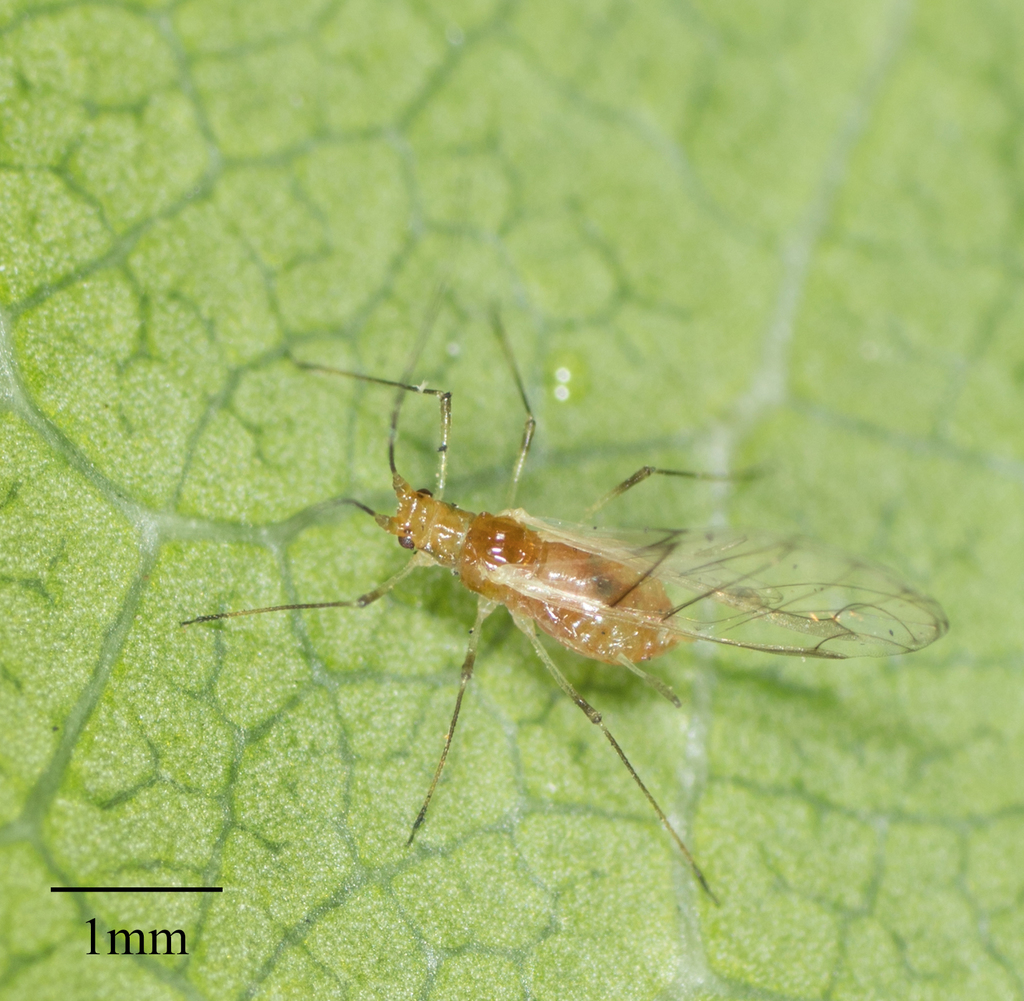
After getting through so many, I thought it was time to put together one location where I can quickly reference all the aphids I have found in Southern California. I will add on to as I continue to find more. This should be able to serve as a quick reference for anyone trying to identify an aphid they found or looking to find more species.
Given the complexity of aphids I probably have a few incorrect identifications. Most have been confirmed by someone who knows more about aphids than I, but a few I have stubbornly held on to an identification which is not as certain as it should be.
Acyrthosiphon
Acyrthosiphon kondoi:A common aphid on legumes. It can be separated from pea aphids by inspecting the antenna. The blue alfalfa antenna gradually darken to brown.

Host: I found it on a deervetch (Acmispon sp)
Acyrthosiphon lactucae:
This is one of the most common aphids in California. However it is surprisingly difficult to find. When I first found it I had to stare at prickly lettuce plants for a good five minutes before I saw it. However once you start to watch for it among the flowers you will almost always find it.

Host: Prickly lettuce (Lactuca serriola) as well as cultivated lettuce
Aphis
Aphis (asclepiadis?)A difficult to identify aphid which I need to return to in an attempt to get a more certain ID.

Hosts: I found them on Red yucca (hesperaloe parviflora)
Aphis ceanothi
Due to the small number of species of aphids recorded on Ceanothus this seems to be an easily identified species for an Aphis.

 Hosts: I found them on (Ceanothus)
Aphis coreopsidis:
These aphids have distinctive antenna which are light at the base then dark, they also have a light head.

 Hosts: A very common aphid on Bidens pilosa
 Aphis craccivora:
A very common aphid on a wide variety of hosts. Unfortunately not very easily identified from photos due to the large number of black Aphis members.

Hosts: I have mostly found these on the climbing milkweed (Funastrum cyanchoides) in my yard and on bur clover plants
Aphis (fabae?):
Very difficult to identify. I have never found one which is a solid ID for this species. However I included it since I found some aphids which are probably this species.

Hosts: The aphids I believe are this species were on nightshade and dock (Rumex) plants.
Aphis farinosa:
A rather generic looking green Aphis. On willows there are apparently not many similar aphids though making it reasonably easy to identify.

Hosts: Willows
Aphis gossypii:
One of the most common aphids in Southern California but not particularly easy to identify due to the number of similar Aphis species.

Hosts: I have found it on a huge variety of plants including star jasmine, roses, hibiscus, Bidens pilosa, and Triadica sebifera
Aphis (cytisorum?):
Another challenging to identify black Aphis

Hosts: I found it on Spanish broom(Spartium junceum).
Aphis nasturtii:
Yet another generic green aphid. The siphinculi is significantly lighter than melon aphids or spirea aphids.

Hosts: Primroses, thus far I have only found on Oenothera elata.
Aphis nerii:
This is probably the most commonly found aphids in Southern California. Find a milkweed plant, it almost certainly has loads of this aphid.

Hosts: I have found this only on Asclepias and Funastrum species although it can be found on a great many other plants.
Aphis pentstemonicola:
Not particularly common but unusually easily identified from photos due to the large dark patches.

Hosts: I found it on Penstemon grinnellii, although it is likely present on other Penstemons
Aphis sambuci
Yet another generic Aphis. These seem to be distinctive due to how closely they pack on the stems of elderberries.

Hosts: I found these on blue elderberries, and docks (Rumex)
Aphis sedi:
These are so close to melon aphids that I am not certain I found them. However I have found aphids on a member of the stonecrop which look like melon aphids but have a dark cauda.

Hosts: I only identified the host plant to the stonecrop family.
Aphis spiraecola:
One of the most common aphids in Southern California, particularly in hotter months. It is present on a great many plants. On some hosts it is very difficult to separate from A. pomi but on many plants this is the

Hosts: Seems like they are found on just about anything. Among other plants I have seen them on indian hawthorn. citrus, and Bidens pilosa.
Aphis Sp.
An aphid I found on docks and was never able to find a plausible species level ID for.

Hosts: Dock
Brachycaudus
Brachycaudus cardui:One of the more recognizable and common aphids.

Brachycaudus helichrysi:
I suspect that I have encountered this species much more as they just look to me like nymphs. Since nymphs are not typically identifiable I likely passed these by. When I found them they were with two Aphis species so I simply did not realize that there was a third species there.


Hosts: I found them on sunflowers, but they are likely to be present on many other plants.
Braggia
Braggia deserticola
I only found this species because I noticed some ants among the flowers of a buckwheat plant. They hid well enough that I have probably walked past a great many.The really short siphunculi should separate them from other species in the genus.

Braggia eriogoni
Another Braggia species which is easy to tell from Braggia deserticola due to the longer siphunculi and white patches.

Brevicoryne
Brevicoryne brassicae:Cabbage aphids are one of the more reported aphids on iNaturalist due to how common and conspicuous they are.

Host: Mustards including wild black mustard and cultivated mustards such as cabbage, kale, and broccoli .
Carolinaia
Carolinaia (setariae?):The first time I found it I threw away the photos because I thought it was a mummy. Further examination though showed them to be clearly living aphids. The species was previously only reported from Mexico and Brazil but the description seems to match C. setariae.

Host: Grasses,most commonly hiding among the flowers of Polypogon monspeliensis.
Chaitophorus
Chaitophorus populicola:One of the most common aphids on Poplar trees. Easiest to identify from the winged alate form, but I never seem to find them.

Chaitophorus sp 1:
I found some aphids near Jenks Lake which don't seem to fit in any key. They must be an undescribed species.

Chaitophorus sp 2:
A batch of aphids I found in the Angeles National Forest but have not managed to identify to species.

Chaitophorus sp 3:
Another batch of aphids I found in the Angeles National Forest but have not managed to identify to species.

Chaitophorus sp 4:
Some aphids I found in Diamond Bar but have not managed to identify to species.

Hosts: Willows
Diuraphis
Diuraphis noxia:Russian Wheat aphids are easily identified by what looks like a second tail.

 Hosts: Many grasses, I found them on wall barley Hordeum murinum
 Dysaphis
Dysaphis apiifolia:A small aphid resembling an Aphis.

Eulachnus
Eulachnus (agilis?):
This is a complicated genus which I need to do some research on. I only have found records of two species in the Eulachnus genus in California. If these are the two species I am finding than this one is E. agilis. Unfortunately it sounds like this genus is a mess, so confirming that will take some work:

Host: Pine trees
Eulachnus (rileyi?):
There is a very common species on pines in Southern California which sure looks like E. rileyi to me. However I have yet to be able to complete a key to identify one of these so given the complexity of the genus it may well be something else.

Host: Pine trees
Essigella
EssigellaLike Eulachnus this is another genus of aphids on pines which I need to give some more thought to.

Hosts: Pine Trees
Eucarazzia
Eucarazzia elegans:This is an oddball aphid which was relatively easily identified despite the fact I found it on a less than typical host.

Greenidea
Greenidea (ficicola?):The hairy siphinculi on this species makes it relatively easy tell from other aphids. This is the Greenidea best recorded as being present in California

Greenidea psidii:
The hairy siphinculi on this species makes it relatively easy tell from other aphids. I haven't done enough research to be certain there are not others in the genus, but as best I can tell this one is correct.

Hyperomyzus
Hyperomyzus lactucae:This is one of the most easily found aphids in Southern California. They are very common on sow thistle (Sonchus) plants which are a very common weed. The problem is that despite being common they are pretty difficult to tell from other members of the genus. In particular Hyperomyzus carduellinus is difficult to rule out. At the moment all the aphids in this genus I have investigated have been either inconclusive or Hyperomyzus lactucae though. So maybe that is the only species we have here.

Hysteroneura
Hysteroneura setariaeResembling yet another black Aphis, this is one of the more common aphids on grass. The pale sections on the antenna, tibae and cauda make this surprisingly easy to identify.

Hosts: A wide variety of grasses. I have found this most consistently on Bermuda Grass but it is not uncommon on other species such as Schismus
Illinoia
Illinoia liriodendriNot a typical aphid of California but I found some on a Tulip Tree in a park.

Lipaphis
Lipaphis pseudobrassicaeA common aphid on many mustard plants, often hiding among flowers. Somewhat resembles cabbage aphids but has less wax.

Macrosiphoniella
Macrosiphoniella ludovicianaeA difficult to identify inhabitant of Artemisia plants.

Macrosiphoniella glabra
Another difficult to identify inhabitant of Artemisia plants.

Macrosiphum
Macrosiphum californicumUnusual for willow aphids that there do not appear to be a ton of look-alikes(or if there are they are currently undescribed)so it is relatively easily identified.

Macrosiphum euphorbiae
If you search for Aphids in Southern California you quickly get tired of seeing yet another potato aphid. They inhabit a great many plants in huge numbers.

Hosts: I have found them on roses, prickly lettuce (lactuca serriola) sow thistles (sonchus), fleabanes (erigeron), orange bush monkeyflowers (mimulus aurantiacus), and white sage (Salvia apiana). Which pretty much means they eat anything.
Macrosiphum gaurae
A large aphid on primroses. Can be separated from M. euphorbiae by the additional dark on the siphinculi.


Hosts: I found it on Oenothera elata, it should be present on other primroses.
Macrosiphum rosae
One of the more common aphids, lots of look-alikes but I belive these can be identified due to the long dark siphunculi.

Hosts: Roses
Macrosiphum salviae
As far as I can tell I am the only one to have reported this aphid in California. The large dark patch on the back may be distinctive.

Hosts: Salvia greggii
Melanaphis
Melanaphis donacisA common and easily identified aphid on giant reeds.

Metopolophium
Metopolophium dirhodumI will have to learn to pay attention to potato aphids on roses to make sure I don't confuse this one. They appear to typically be lighter colored than potato aphids.

Hosts: I have seen rose grain aphids on grasses. Presumably they also can be found on roses.
Mindarus
Mindarus Sp.Relatively found on white fir plants because of the curling of newly grown in leaves they cause. They proved to be very difficult to get to species.

Hosts: I always found on white fir (Abies concolor)
Myzocallis
Myzocallis longirostrisAs best I can tell, this species was apparently previously unreported in California. That means it is pretty likely I misidentified it. It did seem to key out to this species though.

Myzocallis punctata
One of the more brightly colored aphids. Supposedly there are some look-alikes but I haven't really researched the genus.

Myzocallis sp.
A drab aphid which proved incredibly difficult to get to species. I may try again once I finish some microscope upgrades.


Hosts: Oaks
Myzus
Myzus persicaeGreen peach aphids, another weedy aphid present on a wide variety of hosts.

 Hosts: I most often find these on the leaves of mustard plants. I have also found on Vinca major.
Neophyllaphis
Neophyllaphis (varicolor?)Before doing this I failed entirely to grasp the transient nature of aphids. When I found this species in August they were ridiculously common. Then they disappeared within a few weeks of my seeing them and I have not seen them again.

Neosymydobius
Neosymydobius (paucisetosus?)I came to the conclusion this is N. paucisetosus, or it seemed to key out correctly but any time a species is previously unphotographed it is hard.

Hosts: Oaks
Neotoxoptera
Neotoxoptera formosanaLate the last few winters a plague of these descended on my onions. They seem to disappear by late spring.

Hosts: Onions and chives
Pterocomma
Pterocomma Sp.Now that I know a bit more about aphids I will have to track down this genus and try again to identify to species. Thus far I have failed to identify one though.

Hosts: Willows
Pleotrichophorus
Pleotrichophorus gnaphalodesA hairy white aphid which I suspect is rather common and easily identified on California mugwort.

Pleotrichophorus oestlundii
A well camouflaged species which can be found on Goldenbush plants.

Hosts: Ericameria
Pleotrichophorus stroudi
Another species of green Pleotrichophorus which are somewhat difficult to identify.

Hosts: Ericameria
Pterocallis
Pterocallis alniA small aphid resembling a chaitophorous species. Sometimes it is present in large numbers on alders in canyons. I found it on an alder in a park. The dark spots on the legs make it straight forward to identify.

 Hosts: Alders
Rhopalosiphum
Rhopalosiphum (maidis?)I found some grass aphids and completely failed to key them out. Looking at pictures of R. maidis it seems like they must be R. maidis though.

Hosts: I found it on a grass in the genus Phalaris, but it should be on many other types of grass.
(Rhopalosiphum nymphaeae?)
Often I find aphids after I get home. This aphid hiding on duckweed was one of them. A shame I didn't see it in the field or I would have got better photos.

Hosts: Duckweed
Rhopalosiphum padi
As far as I can tell this is one of the more common and easily identified of aphids on grass. The rust color around the siphunculi stands out a lot.

Hosts: Grasses and similar monocots. Hordeum murinum and Iris are two examples.
Sarucallis
Sarucallis kahawaluokalaniIn the running for the hardest aphid name to say. Luckily it is about the easiest aphid to find and identify. Find a crape-myrtle tree. This isn't hard, you probably see a hundred trees a day as they are such commonly planted street trees. Look under a couple of leaves. There, you found it.

Schizolachnus
Schizolachnus sp.Did I mention pine aphids were hard?

Hosts: Pines
Sipha
Sipha flavaMuch less common than Sipha maydis, but also occassionally found on grasses.

Sipha maydis
A recent introduction to Southern California which is now one of the most common aphids on grasses.As it is so common on many of the most invasive grasses this one may actually be having a real ecological impact.

Hosts: Grasses. I have found it on many common grasses such as Hordeum murinum Avena barbata and Bromus diandrus
Sitobion
Sitobion avenaeThere are two common dark green aphids on grasses. This one can be separated from S. fragariae because of the long cauda.

Sitobion fragariae
Another generic green aphid. Commonly found hiding among grass seeds. Can be separated from S. avenae because of the short cauda compared to the siphunculi.

Stegophylla
Stegophylla (essigi?)This aphid can be commonly found on live oak trees by looking for either white fluff on the leaves or folded up leaves. I haven't been able to solidly confirm species, but it is probably S. essigi.

Hosts: Oaks
Tamalia
Tamalia Sp.These are what make the red galls on Manzanita plants. Almost all the Tamalia on iNaturalist are marked as Tamalia coweni. In parts of the state this might be accurate, but I suspect many are other members of the genus in many of those galls. If you find these, try to get a picture of the actual aphid, not just the gall.

 Hosts: Manzanita
Therioaphis
Therioaphis trifoliiThese have been present in my back yard for some time. They hide under clover leaves. Despite a lot of looking I have yet to see any on clover plants not in my yard.

 Hosts: Clover
Tinocallis
Tinocallis saltansSurprise! Another aphid!

Hosts: Siberian elm, Ulmus pumila.
Tinocallis (ulmiparvifoliae?)
This is a common aphid in urban areas. It only has a winged form. I believe the bumps and markings on its head and thorax make it T. ulmiparvifoliae but I don't know the genus well.

Uroleucon
Uroleucon ambrosiaeOne of the red aphids that can be found on top of mule fat plants. Apparently there is some controversy as to whether this species actually inhabits plants other than ragweed, but it sure seemed to key out to this.

Hosts: Mule Fat
Uroleucon erigeronense
Looking suspiciously like potato aphids, these are supposed to be common on plants of the sunflower family.


Hosts: Telegraphweed (Heterotheca grandiflora)
Uroleucon picridis
Apparently both U. picridis and U. sonchi live on bristly ox tongue. Every time I find them though they seem to key out to U. picridis.

Hosts: Bristly ox tongue (Helminthotheca echioides)
Uroleucon sonchi
There are supposed to be a great many Uroleucon species present on sow thistle. I often think I found a new one of them. Thus far every single one has been U. sonchi on closer examination.

Uroleucon Sp.
This species was very common northwest of Palm Springs on Brittlebush plants. At the time I was not up to the task of identifying it beyond genus but I will have to try again next spring.

Hosts: Encelia farinosa
Wahlgreniella
Wahlgreniella nervataThese have been on the tree in my front yard for a couple years now. They seem to come in waves where sometimes I can hardly find them and other times they are everywhere. Somewhat unusual in having two color forms.
Apparently species are poorly understood in this genus so the identification is somewhat tenuous.